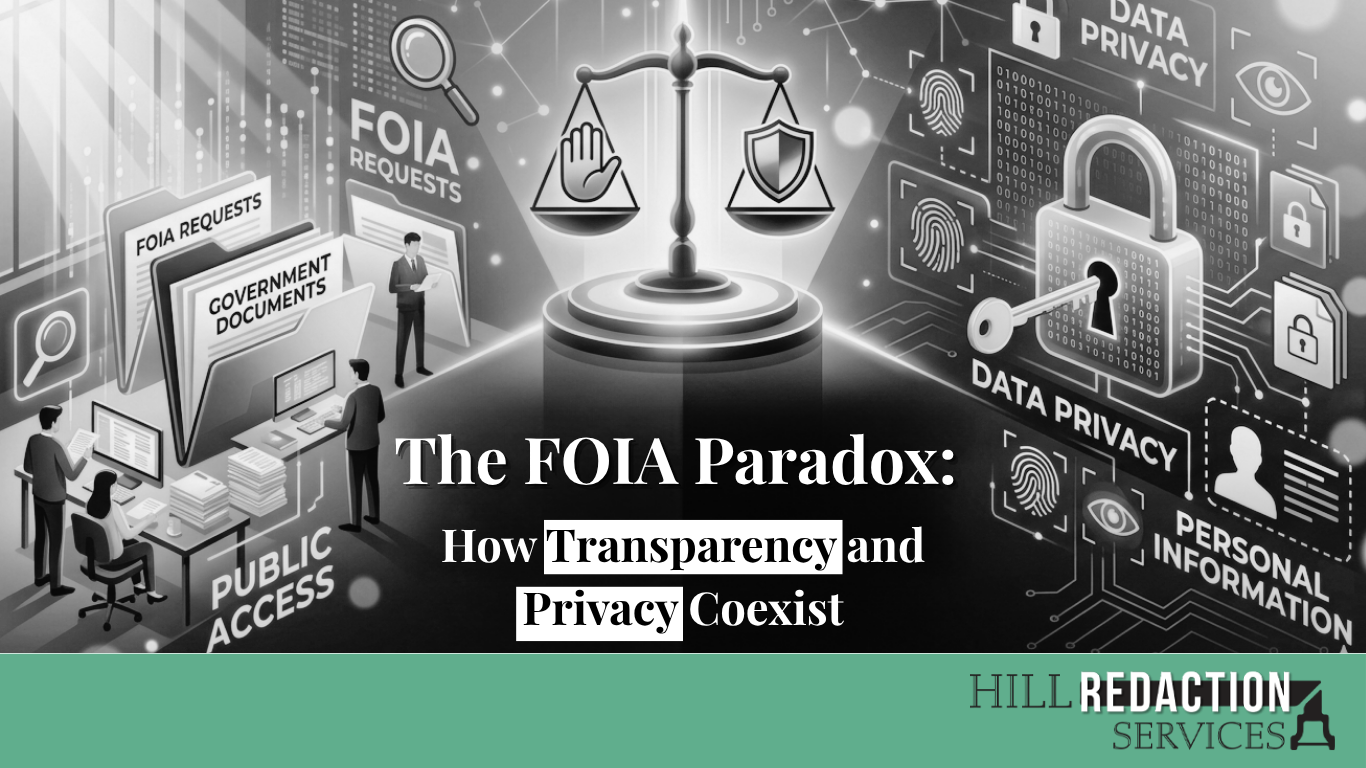
Sunshine Week serves as a national reminder that an open government is the cornerstone of a functioning democracy. However, for the agencies and legal teams tasked with fulfilling Freedom of Information Act (FOIA) requests, the “Right to Know” often runs head-first into a second, equally vital mandate: the Right to Privacy.
This creates the FOIA Paradox. How do you throw open the doors of the public record without leaving the private lives of individuals exposed?
The Delicate Balance of Disclosure
Transparency is often compared to sunlight-it disinfects and provides clarity. But uncontrolled sunlight can also scorch. When a government document is released, it frequently contains a “digital fingerprint” of personal data:
- Home addresses and phone numbers of private citizens.
- Social Security numbers or financial identifiers tucked into headers.
- Sensitive medical or legal histories that were never intended for the public eye.
The goal of professional redaction isn’t to hide the truth; it is to filter the exposure. By securely masking these identifiers, agencies can fulfill their transparency obligations while maintaining their ethical and legal duty to protect PII (Personally Identifiable Information).
Why “Manual Masking” Fails the Public Trust
One of the greatest risks to this balance is the use of insufficient tools. Many organizations still rely on “manual masking”-simply drawing a black box over text in a standard PDF editor.
The danger is that the underlying data often remains in the file’s bitstream or metadata. During Sunshine Week and beyond, a failed redaction is more than just a technical glitch; it is a breach of public trust that can lead to litigation, fines, and reputational damage.
The Path Forward: Precision as a Standard
As we wrap up March and reflect on National Ethics Month, the lesson is clear: Transparency without exposure is a choice. It requires a proven process that treats every black bar as a shield for a real person’s privacy.
Whether you are managing high-volume mortgage servicing records or complex government FOIA requests, precision is the only way to resolve the paradox.
Final Thought
As the first quarter of 2026 comes to a close, ask yourself: Are your redaction habits leaving your organization-and the people you serve-exposed?
Related Posts
Sunshine Week serves as a national reminder that an open government is the cornerstone of a functioning democracy. However, for the agencies and legal teams tasked with fulfilling Freedom of Information Act (FOIA) requests, the “Right to Know” often runs head-first into a second, equally vital mandate: the Right to Privacy.
This creates the FOIA Paradox. How do you throw open the doors of the public record without leaving the private lives of individuals exposed?
The Delicate Balance of Disclosure
Transparency is often compared to sunlight-it disinfects and provides clarity. But uncontrolled sunlight can also scorch. When a government document is released, it frequently contains a “digital fingerprint” of personal data:
- Home addresses and phone numbers of private citizens.
- Social Security numbers or financial identifiers tucked into headers.
- Sensitive medical or legal histories that were never intended for the public eye.
The goal of professional redaction isn’t to hide the truth; it is to filter the exposure. By securely masking these identifiers, agencies can fulfill their transparency obligations while maintaining their ethical and legal duty to protect PII (Personally Identifiable Information).
Why “Manual Masking” Fails the Public Trust
One of the greatest risks to this balance is the use of insufficient tools. Many organizations still rely on “manual masking”-simply drawing a black box over text in a standard PDF editor.
The danger is that the underlying data often remains in the file’s bitstream or metadata. During Sunshine Week and beyond, a failed redaction is more than just a technical glitch; it is a breach of public trust that can lead to litigation, fines, and reputational damage.
The Path Forward: Precision as a Standard
As we wrap up March and reflect on National Ethics Month, the lesson is clear: Transparency without exposure is a choice. It requires a proven process that treats every black bar as a shield for a real person’s privacy.
Whether you are managing high-volume mortgage servicing records or complex government FOIA requests, precision is the only way to resolve the paradox.
Final Thought
As the first quarter of 2026 comes to a close, ask yourself: Are your redaction habits leaving your organization-and the people you serve-exposed?