Cybersecurity Awareness Month: The Overlooked Risk Hiding in Your Redacted Documents
October marks Cybersecurity Awareness Month, when organizations across the legal, compliance and corporate sectors evaluate their digital defenses. Firewalls, encrypted servers and multi-factor authentication get most of the attention, but one critical attack surface is routinely overlooked: sensitive document disclosures.
Court filings, contracts and public disclosures are routinely published with superficial redactions. To the untrained eye, black boxes over text look secure. To a bad actor or opposing counsel, incomplete sanitization is an open door to trade secrets, personally identifiable information (PII) and proprietary data. In 2019, a high-profile federal filing made national headlines when reporters simply copied and pasted the “redacted” text into a new document.
The Hidden Risk of Superficial Redaction
Traditional redaction often relies on standard PDF viewers or basic drawing tools to place black rectangles over text. That covers the words on screen but leaves the underlying data fully intact.
Common vulnerabilities include:
Hidden text layers: A black box drawn on a PDF doesn’t delete the text beneath it. Anyone can highlight the area, copy it and paste the “hidden” content into a plain text file.
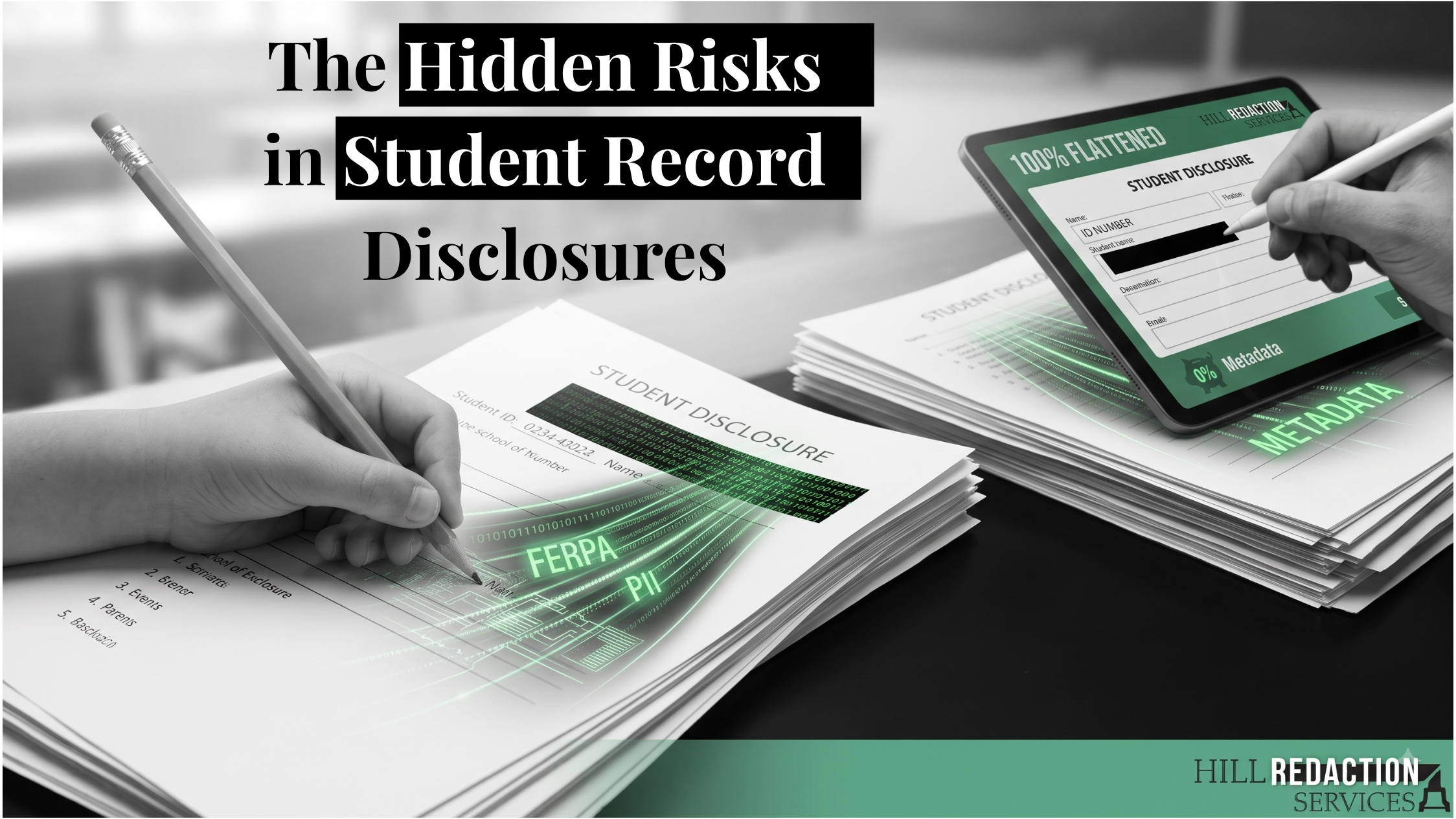
Embedded metadata: Digital files store author details, edit histories, comments, tracked changes and software properties. Drawing tools don’t touch any of it.
Removable markup: Many redaction boxes are just annotations. A reader can select and delete the rectangle to reveal the text underneath.
Courts and regulators can treat a failed redaction as a disclosure of the underlying information, which can mean waived privilege, sanctions or regulatory penalties.
Essential Steps for Forensic Document Sanitization
True document security requires removing data, not just covering it. A rigorous process includes:
Permanent content removal: The underlying text and data are deleted from the file itself, so nothing remains to recover.
Metadata purging: Document properties, author tags, revision histories, comments, hidden data and embedded attachments are stripped from the final export.
Flattened output: Redaction marks are burned into the final document so it cannot be un-layered or reverted to its original state.
Compliance verification: Filings and disclosures are checked against applicable privacy requirements, such as Federal Rule of Civil Procedure 5.2, HIPAA and state data privacy laws.
How We Help Secure Your Disclosures
At Hill Redaction Services, we bridge the gap between high-volume document workflows and uncompromising security standards. We pair rule-based automation with expert forensic review, so every disclosure is verified before it leaves your hands. Our process is deterministic: it matches defined rules and removes content at the file level rather than predicting or generating text. That means consistent, auditable results your firm can rely on for court records and public releases.
Strengthen Your Document Security This October
Cybersecurity is only as strong as its weakest disclosure. As your organization reviews its security posture this month, take a close look at how your documents are redacted and prepared for release.
Visit hillredact.com to learn more about our forensic document sanitization services, or contact our team to request a redaction audit.
Related Posts
Cybersecurity Awareness Month: The Overlooked Risk Hiding in Your Redacted Documents
October marks Cybersecurity Awareness Month, when organizations across the legal, compliance and corporate sectors evaluate their digital defenses. Firewalls, encrypted servers and multi-factor authentication get most of the attention, but one critical attack surface is routinely overlooked: sensitive document disclosures.
Court filings, contracts and public disclosures are routinely published with superficial redactions. To the untrained eye, black boxes over text look secure. To a bad actor or opposing counsel, incomplete sanitization is an open door to trade secrets, personally identifiable information (PII) and proprietary data. In 2019, a high-profile federal filing made national headlines when reporters simply copied and pasted the “redacted” text into a new document.
The Hidden Risk of Superficial Redaction
Traditional redaction often relies on standard PDF viewers or basic drawing tools to place black rectangles over text. That covers the words on screen but leaves the underlying data fully intact.
Common vulnerabilities include:
Hidden text layers: A black box drawn on a PDF doesn’t delete the text beneath it. Anyone can highlight the area, copy it and paste the “hidden” content into a plain text file.
Embedded metadata: Digital files store author details, edit histories, comments, tracked changes and software properties. Drawing tools don’t touch any of it.
Removable markup: Many redaction boxes are just annotations. A reader can select and delete the rectangle to reveal the text underneath.
Courts and regulators can treat a failed redaction as a disclosure of the underlying information, which can mean waived privilege, sanctions or regulatory penalties.
Essential Steps for Forensic Document Sanitization
True document security requires removing data, not just covering it. A rigorous process includes:
Permanent content removal: The underlying text and data are deleted from the file itself, so nothing remains to recover.
Metadata purging: Document properties, author tags, revision histories, comments, hidden data and embedded attachments are stripped from the final export.
Flattened output: Redaction marks are burned into the final document so it cannot be un-layered or reverted to its original state.
Compliance verification: Filings and disclosures are checked against applicable privacy requirements, such as Federal Rule of Civil Procedure 5.2, HIPAA and state data privacy laws.
How We Help Secure Your Disclosures
At Hill Redaction Services, we bridge the gap between high-volume document workflows and uncompromising security standards. We pair rule-based automation with expert forensic review, so every disclosure is verified before it leaves your hands. Our process is deterministic: it matches defined rules and removes content at the file level rather than predicting or generating text. That means consistent, auditable results your firm can rely on for court records and public releases.
Strengthen Your Document Security This October
Cybersecurity is only as strong as its weakest disclosure. As your organization reviews its security posture this month, take a close look at how your documents are redacted and prepared for release.
Visit hillredact.com to learn more about our forensic document sanitization services, or contact our team to request a redaction audit.